 admin1
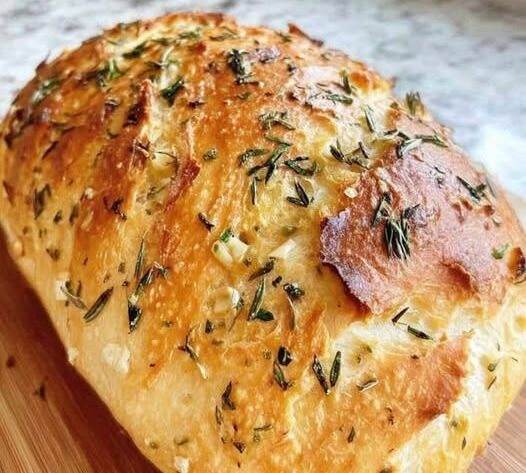
 No-Knead Gluten-Free Artisan Bread
Yield
- 1 large loaf
- 12–14 slices
What Makes This Bread Work?
Traditional bread relies on gluten to trap gas and create structure. Since gluten-free flours lack gluten, this recipe uses:
- Psyllium husk to create elasticity
- A blend of gluten-free flours for flavor and structure
- Long fermentation for better taste
- High hydration (more water) for an open crumb
- No kneading required
The dough will look much wetter than regular wheat bread dough. That is normal.
Ingredients
Dry Ingredients
- 300 g brown rice flour (about 2½ cups)
- 150 g sorghum flour (about 1¼ cups)
- 100 g tapioca starch (about ¾ cup)
- 50 g potato starch (about ⅓ cup)
- 15 g psyllium husk powder (about 2 tablespoons)
- 10 g fine sea salt (about 1¾ teaspoons)
- 7 g instant yeast (1 packet or 2¼ teaspoons)
Wet Ingredients
- 550 ml warm water (about 2⅓ cups)
- 15 ml olive oil (1 tablespoon)
- 15 ml honey or sugar (1 tablespoon)
Optional:
- 1 teaspoon apple cider vinegar
- 2 tablespoons sunflower seeds
- 2 tablespoons pumpkin seeds
- 1 tablespoon sesame seeds
Equipment
- Large mixing bowl
- Wooden spoon or spatula
- Dutch oven or heavy baking pot with lid
- Parchment paper
- Kitchen scale (highly recommended)
- Cooling rack
Step 1: Prepare the Liquid
In a large bowl combine:
- Warm water
- Honey or sugar
- Olive oil
- Vinegar (if using)
The water should feel pleasantly warm, around 35–40°C (95–104°F).
Too hot can kill the yeast.
Too cold will slow fermentation.
Stir until the honey dissolves.
Step 2: Mix the Dry Ingredients
In a separate bowl whisk together:
- Brown rice flour
- Sorghum flour
- Tapioca starch
- Potato starch
- Psyllium husk
- Salt
- Yeast
Mix thoroughly.
This prevents clumps and ensures the yeast and salt are evenly distributed.
Step 3: Combine Everything
Gradually add the dry ingredients to the wet ingredients.
Stir with a wooden spoon or spatula.
At first the mixture may seem loose and sticky.
After 1–2 minutes, the psyllium begins absorbing water and thickening the dough.
Continue mixing until no dry flour remains.
The dough should resemble a very thick cake batter or extremely sticky bread dough.
Do not add much extra flour.
Gluten-free dough is naturally wetter.
Step 4: Rest the Dough
Cover the bowl with:
- Plastic wrap
- A lid
- A damp kitchen towel
Let the dough rest for 15 minutes.
This hydration period allows:
- Psyllium to absorb moisture
- Starches to hydrate
- Dough consistency to stabilize
After resting, the dough should feel noticeably thicker.
Step 5: Shape Without Kneading
Unlike wheat dough, there is no need to knead.
Wet your hands lightly.
Gently gather the dough into a rough ball.
Do not worry about perfection.
The goal is simply to create a loaf shape.
If adding seeds, sprinkle them over the dough now and gently press them onto the surface.
Step 6: Long Rise
Place the dough back into the bowl.
Cover well.
Allow to rise:
Option A (Fast)
- 1½ to 2 hours at room temperature
Option B (Best Flavor)
- 8–18 hours in the refrigerator
The longer rise develops:
- Better flavor
- Improved texture
- More artisan-style character
For overnight fermentation, refrigerate the dough and bake the next day.
Step 7: Prepare for Baking
About 45 minutes before baking:
Place your Dutch oven with its lid into the oven.
Preheat to:
230°C (450°F)
A thoroughly heated Dutch oven helps create steam and oven spring.
Step 8: Final Shape
Remove the dough from the bowl.
Transfer onto parchment paper.
With wet hands gently shape into a round loaf.
Avoid pressing out all the air.
The dough should remain somewhat puffy.
Step 9: Score the Loaf
Using a sharp knife or razor:
Cut a slash about 1 cm deep across the top.
This controls expansion and helps create an artisan appearance.
You can make:
- One long slash
- A cross pattern
- Decorative cuts
Step 10: Bake Covered
Carefully remove the hot Dutch oven.
Using the parchment paper as a sling, lower the dough into the pot.
Cover with the lid.
Bake:
- 35 minutes covered
The trapped steam helps:
- Increase volume
- Improve crust formation
- Prevent early drying
Step 11: Bake Uncovered
Remove the lid.
Continue baking:
- 20–30 minutes uncovered
The crust should become:
- Deep golden brown
- Crisp
- Slightly crackled
Internal temperature should reach approximately:
96–99°C (205–210°F)
Step 12: Cooling (Very Important)
Remove bread from the Dutch oven.
Place on a cooling rack.
Cool for at least:
- 2 hours minimum
- 3–4 hours preferred
Many gluten-free breads seem gummy if sliced too early.
The crumb continues setting during cooling.
Patience makes a huge difference.
Troubleshooting Guide
Bread Too Dense
Possible causes:
- Not enough rise time
- Old yeast
- Dough too dry
- Insufficient hydration
Solution:
- Increase water by 20–30 ml
- Extend fermentation
Bread Too Gummy
Possible causes:
- Underbaked
- Sliced while hot
Solution:
- Bake 10–15 minutes longer
- Cool completely
Bread Collapsed
Possible causes:
- Excess water
- Overproofing
Solution:
- Reduce water slightly
- Shorten rise time
Crust Too Hard
Possible causes:
- Overbaking
- Low humidity
Solution:
- Reduce uncovered baking time
- Wrap cooled bread in a towel for several hours
Variations
Rustic Seeded Loaf
Add:
- 2 tbsp flax seeds
- 2 tbsp sunflower seeds
- 2 tbsp pumpkin seeds
Herb Bread
Add:
- 1 tsp rosemary
- 1 tsp thyme
- 1 tsp oregano
Olive Bread
Add:
- ½ cup chopped olives
Garlic Bread
Add:
- 3 minced garlic cloves
- 1 tsp dried parsley
Storage
Room temperature:
- 2–3 days in an airtight container
Refrigerator:
- Up to 1 week
Freezer:
- Up to 3 months
For freezing:
- Slice completely.
- Separate slices with parchment.
- Freeze in a sealed bag.
- Toast directly from frozen.
Baker’s Notes
For the best gluten-free no-knead loaf:
- Weigh ingredients rather than using cups.
- Use psyllium husk—it’s the key structure builder.
- Keep the dough wetter than regular bread dough.
- Allow a long fermentation whenever possible.
- Bake in a preheated Dutch oven.
- Cool completely before slicing.
The result is a crusty, artisan-style gluten-free bread with a chewy crumb, excellent flavor, and no kneading required.