 admin1
 Philly Cheesesteak Casserole is a rich, oven-baked comfort dish that transforms the iconic flavors of a classic Philly sandwich into a layered, creamy, and deeply savory baked meal. It takes everything people love about a traditional Philly cheesesteak such as thinly sliced beef, sautéed onions and peppers, and melted cheese, and combines it with a custard-like binding base that holds everything together into a sliceable casserole. The result is warm, hearty, and ideal for family dinners, gatherings, or meal prep where you want something filling, flavorful, and easy to serve in large portions.
This version is intentionally expanded into a very detailed, slow-cooked style recipe so you understand not just what to do, but why each step matters and how each ingredient contributes to the final texture and flavor. The goal is a casserole that is juicy but not watery, creamy but not heavy, and cheesy without becoming greasy.
To begin, the foundation of this dish is the beef. The best results come from using thinly sliced ribeye or sirloin because these cuts stay tender while still offering enough fat to carry flavor. If the slices are too thick, the texture becomes chewy instead of soft and melt-in-your-mouth. If you can, partially freeze the beef for about twenty to thirty minutes before slicing. This firms it up and allows you to cut it into very thin strips, almost like shaved steak. That thinness is what allows the beef to absorb seasoning quickly and cook evenly in a hot pan without drying out.
Heat a large heavy skillet or wide pan over medium-high heat until it is properly hot. Add olive oil and allow it to shimmer before placing any meat inside. The pan needs to be hot enough that the beef sizzles immediately on contact. Add the beef in small batches rather than all at once. This is important because overcrowding the pan causes steaming instead of searing, and steaming prevents browning. Browning is where the deep, savory flavor develops through caramelization. Each batch of beef should be cooked for only a few minutes until it develops a light brown crust but remains tender inside. Once cooked, remove it from the pan and set it aside while you continue with the remaining batches.
After all the beef is seared, reduce the heat slightly and begin preparing the vegetable base in the same pan. This is where much of the casserole’s aroma develops. Add butter to the pan so it melts into the leftover beef juices. Then add thinly sliced onions. The onions should cook slowly and steadily, not quickly. Over about six to eight minutes, they soften, release their natural sweetness, and begin to turn slightly golden. This natural sweetness is important because it balances the saltiness of the beef and cheese later.
Once the onions have softened, add sliced green bell peppers and red bell peppers. These bring freshness, slight bitterness, and a gentle crunch that contrasts with the softness of the onions. Continue cooking for another five to seven minutes. The goal is not to make them mushy but to soften them enough that they blend smoothly into the casserole once baked. At this stage, add minced garlic. Garlic should only cook for a short time, about thirty seconds, because it burns easily and becomes bitter if left too long on heat.
If you are using mushrooms, add them now. Mushrooms release a significant amount of moisture at first, then gradually reabsorb flavor as they cook down. Let them cook until their liquid evaporates and they become soft and slightly browned. This step deepens the savory profile of the dish, giving it an almost meaty background note even though they are vegetables.
Now return the seared beef into the pan with the vegetables. Stir everything together thoroughly so the meat and vegetables combine evenly. At this stage, season the mixture with salt, black pepper, paprika, and a small amount of chili flakes if you enjoy a mild heat. Add Worcestershire sauce, which is a key ingredient because it introduces umami depth, a slight tanginess, and a subtle sweetness that enhances both beef and vegetables. Allow the mixture to cook together for a few minutes so the beef absorbs these flavors. This step is important because it ensures that the casserole is flavorful throughout and not just on the surface.
Once everything is well combined, turn off the heat and allow the mixture to cool slightly. This is important because adding hot filling directly to the egg mixture later can cause the eggs to scramble prematurely.
Now prepare the creamy binding base. In a large bowl, crack the eggs and whisk them thoroughly until the yolks and whites are fully blended. Pour in heavy cream and continue whisking until the mixture becomes smooth and slightly thickened. Add softened cream cheese and mix until mostly incorporated. It does not need to be perfectly smooth; small lumps of cream cheese are acceptable because they melt during baking and create creamy pockets in the casserole. Season lightly with salt and pepper, but avoid over-seasoning at this stage because the beef mixture already contains seasoning.
This egg and cream mixture is what transforms the dish from a simple stir-fry into a structured casserole. During baking, the proteins in the eggs set and bind everything together, while the cream keeps the texture soft and custard-like rather than rubbery.
Next comes assembly. Preheat your oven to 180 degrees Celsius and lightly grease a large baking dish with butter or oil. If you prefer a more bread-like base, you can add cubed hoagie rolls or toasted bread pieces at the bottom of the dish. This layer will absorb the juices and create a slightly spongy, sandwich-like texture once baked. If you prefer a lower-carb version, you can skip the bread entirely and place the filling directly into the dish.
Spread the beef and vegetable mixture evenly across the dish so every bite will have a balanced amount of meat and vegetables. Pour the egg and cream mixture slowly over the top, allowing it to seep into all the gaps. You can gently press the mixture with a spatula to help it distribute evenly. The liquid should settle into the bottom and edges, binding everything as it bakes.
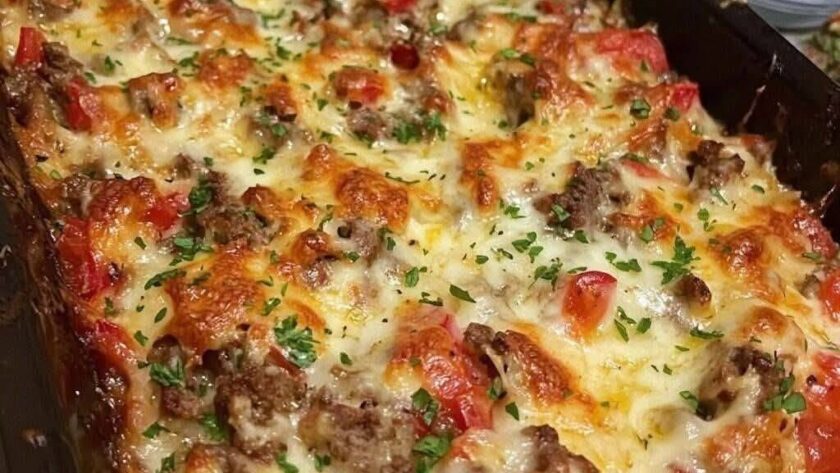
Now comes the cheese layer, which is the defining feature of the dish. Use a combination of mozzarella, provolone, and cheddar for best results. Mozzarella provides stretch and melt, provolone adds a mild, slightly smoky flavor, and cheddar adds sharpness and depth. Spread mozzarella evenly across the surface first, then layer provolone in sections so it melts into creamy pockets, and finally sprinkle cheddar on top for a golden, slightly crisp finish after baking. The combination mimics the gooey, rich texture associated with a traditional Philly cheesesteak.
Place the casserole into the oven and bake for about thirty-five to forty-five minutes. During baking, the eggs will slowly set, the cream will thicken, and the cheese will melt into a unified top layer. You will notice the surface becoming golden and slightly bubbly. The edges will firm up first, while the center may still jiggle slightly when shaken. That gentle jiggle is normal and indicates a soft, custardy interior.
If you prefer a more browned cheese topping, you can switch the oven to broil for the final two to three minutes, but this must be watched closely because cheese can burn quickly under high heat.
Once the casserole is done baking, it should not be cut immediately. Resting is a crucial step. Allow it to sit for at least ten to fifteen minutes after removing it from the oven. During this time, the internal structure stabilizes. The eggs finish setting, the cheese firms slightly, and the juices redistribute throughout the dish. If you cut too early, the casserole may fall apart and release too much liquid.
After resting, cut it into generous squares. The interior should be creamy and soft, with visible layers of beef, peppers, onions, and melted cheese throughout. Each bite should be rich, savory, and slightly stretchy from the cheese.
This casserole is extremely versatile in serving. It can be eaten on its own as a complete meal because it contains protein, fat, and vegetables in one dish. It also pairs well with simple sides such as a fresh green salad, roasted vegetables, or garlic bread if you want to lean into a more indulgent meal. Some people enjoy adding a light drizzle of extra Worcestershire sauce or even a small spoon of garlic butter on top just before serving to intensify the savory notes.
For storage, the casserole holds up very well. Once fully cooled, it should be stored in an airtight container in the refrigerator and can last up to three days. When reheating, the best method is to use an oven at a moderate temperature so the texture stays intact. Microwaving also works, but it may soften the structure slightly more. Interestingly, the flavor often deepens after a day in the fridge as the ingredients continue to meld together.
There are also several variations you can explore once you are comfortable with the base recipe. You can make a spicier version by adding jalapeños or hot sauce into the beef mixture. You can make a lower-carb version by skipping bread entirely and increasing the cheese ratio slightly. You can even make a breakfast-style version by adding more eggs and reducing the beef, turning it into a hearty morning bake. Some variations include swapping beef for chicken, though this changes the traditional profile significantly.
What makes this casserole so satisfying is the balance of textures and flavors. The beef provides savory depth, the vegetables add sweetness and freshness, the cream and eggs provide structure and softness, and the cheese brings everything together into a rich, comforting final layer. It captures the essence of a Philly cheesesteak in a form that is easier to prepare in bulk and serve without needing individual sandwiches.
If you want, I can make an even more extreme ultra-detailed version with step-by-step timing per minute, troubleshooting for common mistakes, and restaurant-style variations.